Wet weather, clay soils and the Melbourne build calendar
Melbourne's reactive clay and winter rain do not care about your start date. This essay covers AS 2870 site classes, winter pours, access tracks, and how to hold a programme when the ground will not.
By Tom Rafter, Construction editor · 7 min read
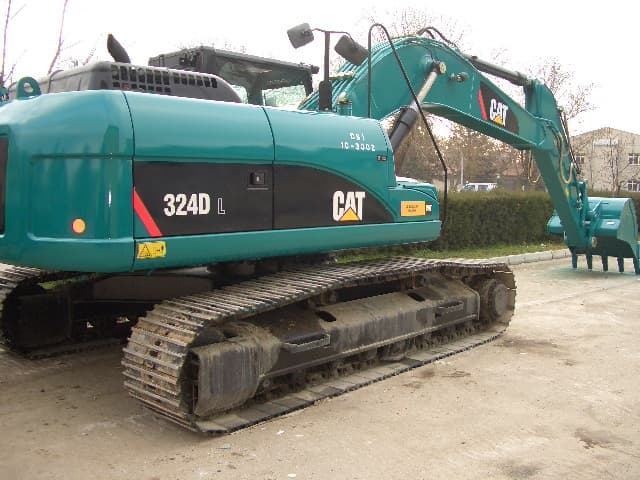
Image: Cano58. CC BY-SA 3.0. See the image credits.

Melbourne sells grey-blue light and then builds on clay that remembers every wet week. The calendar on a residential job here is not optimism. It is moisture. A start date in May is a different contract from a start date in November, even if the drawings are identical. The ground will not be. The access will not be. The pour will not be.
This is not a complaint about weather. It is a note on how to sequence a Victorian house when the soil is reactive and the winter is long. Ignore the soil and you will still get a building. You may not get the one the engineer signed, or the date the client circled.
The ground is not a backdrop
Clients see a vacant block and think of it as empty. It is not empty. It is a profile of clay, silt, fill and, in the west, basalt that has weathered into something that moves when it drinks. Trees at the boundary, a leaking drain from a previous house, a slab next door that has already been underpinned — these are the neighbours your footing will have.
Reactive clay changes volume with moisture. That sentence is in every geotechnical report and is still treated as colour text. In a dry late summer the site is hard and friendly to trucks. In August the same site is a basin. If you cut a pad in the dry and leave it open through a wet month, you have not "waited for the rain to pass". You have changed the moisture condition the classification assumed.
The engineer's slab is not a generic raft. It is a stiffness designed for a range of movement. Push the moisture outside that range — by flooding, by removing a row of trees and then waiting, by running a downpipe onto the pad — and you are building a different structure on the same drawing.
Melbourne's west is famous for this. The basalt plains produce highly and extremely reactive sites as a matter of course. The east and north are more various: residual clays, silt, old creek lines, fill. A site class is not a postcode. It is a report.
Clay remembers water longer than a programme remembers optimism.
AS 2870, in language you can use
AS 2870 is the Australian standard for residential slabs and footings. It gives the site classes that appear on your soil report and then on the engineer's drawing. You do not need to memorise the standard. You need to know what the letter is asking of the job.
- Class A: little or no ground movement. Sand and rock, mostly. Rare as a whole Melbourne story.
- Class S: slightly reactive clay. Movement is modest if you do not help it along.
- Class M: moderately reactive. Ordinary care, ordinary drainage, no casual tree removal.
- Class H1 and H2: highly reactive. The difference is the expected range of movement. This is standard western-suburbs conversation.
- Class E: extremely reactive. The footing becomes a serious piece of engineering, and so does the landscape around it.
- Class P: problem site. Fill, landslip, mine subsidence, collapsing soil, or a site that will not sit in the classes above until something is done. Do not "assume H2" on a P site because it is cheaper to pretend.
The class is not a moral judgement. It is a movement estimate. What you do with it is the moral part. Keep the moisture as even as the report assumed. That means drainage that works during the build, not only in the landscaping brochure. It means not parking a water tanker on the pad. It means being honest about trees: a large tree close to a highly reactive slab is a design input, not a decoration you deal with later.
Articulation joints, brickwork control, and the boring detail of how a rigid paving meets a moving house — these are how AS 2870 leaves the footing and enters the building. A beautiful slab with a rigid terrace poured hard against it is a crack waiting for a dry January.
Winter pours
Cancel is a method
Concrete in an Australian climate has more than one enemy. In Melbourne in July the enemies are water on the pad, water in the mix, a sky that will not give you a clean afternoon, and a crew that has already lost two pours this month and would like this one to happen regardless.
A waffle raft or a stiffened raft wants a pad that is cut to level, protected, and not pumping moisture into the pods. If the trenches are shining, you do not steel them and hope. You wait, or you pump, or you work with the engineer on a method. Mud in the edge beam is not "a bit of extra cover". It is a change to the section.
Book the pour as a cluster: pad ready, steel complete, surveyor booked, pump confirmed, extra plastic on site, a forecast that is not a wish. If the forecast fails at 10am, cancel. The cancellation fees are a preliminary. A bad slab is a building.
Cold is less of a Melbourne problem than wet, but it is not nothing. Do not strip or load a slab because the calendar says "frame Monday" if the concrete has not had the life it was specified to have. Curing is not a summer-only habit. A slab that dries from an August wind on top and sits wet underneath is not being cured. It is being confused. Of course we pour in winter. We also cancel in winter. The builders who keep clients can tell the difference on the morning.
Access tracks
The unsung structure on a wet Melbourne site is the track the trucks drive on. Without it, every delivery becomes a rescue, and the rescue chews the site you have just classified.
A crushed-rock access, geofabric where the clay will pump, and a place to turn that is not the pad — these should be in the preliminaries, not invented after the first bogged concrete truck. The track has to last the excavation, the pour, the frame pack and the later days when a crane outrigger wants something firmer than hope.
Do not use the pad as the track. It is a tempting economy and a reliable way to destroy the moisture condition and the edge. If the block is too small for both, sequence the deliveries and use plates, not bravado.
Street access is part of the same problem. A nature strip that has become a clay ramp will earn you a council letter and a neighbour who will not move their car for the pump. Put down a temporary crossover that can be cleaned. Budget to reinstate it. The cost is smaller than a delayed pour because the truck could not enter.
On sloping sites the track is also a drain you did not mean to build. Water follows the ruts. If those ruts lead to the excavation, you have made a creek. Cut a spoon drain, put in a spoon of gravel, do something adult. The landscape architect can make it pretty later. Your job is to stop the pad becoming a dam.
Holding the programme when the ground will not
A programme that assumes dry weather from May to September is not a programme. It is a brochure. Hold the job by putting float where the clay and the rain actually sit:
- Investigation and classification, before you lock a footing design
- Excavation, as a short window with protection, not as an open invitation
- Pad and pour, with cancel-and-rebook built in
- Frame start, after the slab can take it
- Drainage and temporary downpipes, the week the roof goes on, not the week the landscaper arrives
Tell the client this at tender, in writing. A winter start on a Class H or E site should carry a longer excavation-to-lock-up period than a late-summer start on a kinder block. If the client wants the winter start anyway — school terms, a lease ending — they can have it. They cannot have it and the summer duration.
Site meetings in a wet month should begin with the ground, not with the joinery. Is the pad holding? Is the track holding? Is water being taken away from the building, or into it? These are not rustic concerns. They are how you protect the engineering you have already paid for.
Trees and demolition debris belong in the same conversation. A tree removed in April on a reactive site will change the moisture through winter. A rubble pile against a footing will do the same. The soil report assumed a condition. Your job is not to improve on it with improvisation.
There is a literary temptation to treat Melbourne weather as character. It is not character. It is a load case. Clay is the material that applies it. The builders who do well here are not the ones who "push through". They are the ones who know when the ground is closed, who spend money on tracks and covers, and who will lose a Thursday pour to keep a slab that will still be level in ten summers.
The calendar will always be a negotiation between school terms, trade lead times and the surveyor's diary. Let the clay have a seat at that table. If you do not, it will take one anyway, usually in the week you had reserved for being on time.
Questions from the job
- What do AS 2870 site classes actually mean on a Melbourne block?
- They describe how much the ground is expected to move with moisture. Class A and S are kinder. Class M is moderate. H1 and H2 are highly reactive, common on basaltic clay in the west. Class E is extreme. Class P is a problem site that needs a specific investigation — fill, slope, trees, or something else the standard classes do not cover. Your engineer designs the footing to the class and to the trees you have not yet removed.
- Can we pour a waffle raft in a Melbourne winter?
- Yes, if the pad is prepared, protected and not a pond, the steel has been inspected, and the pour is managed for rain and temperature. No, if you are scraping mud into a shape and hoping the topping looks like concrete. Winter pours need access that will not destroy the edge beams, and a crew willing to stop. A cancelled pour is cheaper than a slab you will argue about for a decade.
Keep reading in Construction
Construction
Sequencing a residential build in Victoria
A residential job in Victoria is a chain of hold points, not a mood board. This essay walks demolition to handover, and says when weather, inspections and trade bookings actually decide the programme.
Tom Rafter · 1 September 2026
Construction
What a good site meeting looks like
A site meeting is not a tour. It is the hour when RFIs, variations and hold points are made to stand still long enough to be decided. Here is who must be there, what the minutes must bind, and when the superintendent speaks.
Tom Rafter · 3 August 2026
Construction
Why preliminaries eat your budget
Scaffold, cranage, sheds, temp power and insurance are not padding. They are the cost of making a site legal and workable. Here is how preliminaries swell, and how clients misread them in a tender.
Tom Rafter · 30 June 2026