The superintendent, the contract and who actually decides
AS 4000, AS 4902 and ordinary domestic contracts all name someone who may instruct, and someone who only pays. Confusing those roles is how a nod on site becomes an unpaid variation. Here is who holds the purse, and what a direction actually is.
By Sophie Lang, Practice editor · 7 min read
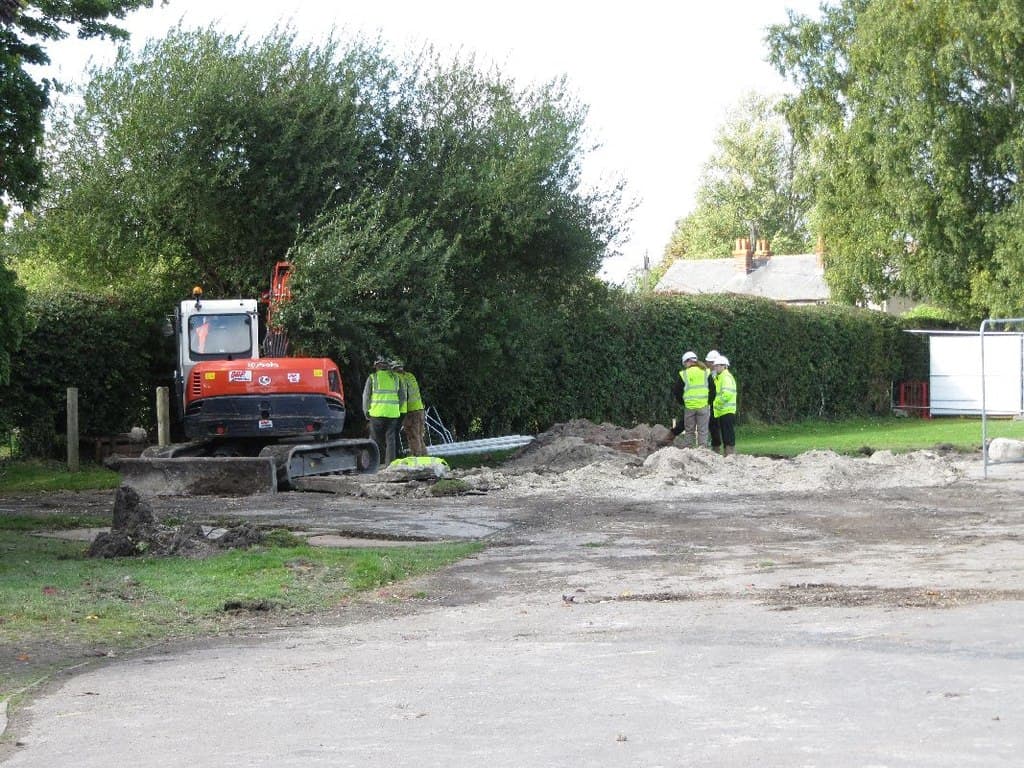
Image: Bill Nicholls / Geograph. CC BY-SA 2.0. See the image credits.

On a working site there are usually three people who believe they decide. The client, because it is their money. The builder, because it is their men and their programme. The architect, because it is their drawing. Australian contracts are less romantic. They name a person who may instruct the work, a person who pays for it, and a person who does the work. When those names blur, the job grows a second, oral contract that nobody priced.
This is not a substitute for the conditions you actually signed. It is a reading of the pattern that keeps returning: in AS 4000, in AS 4902, and in the simpler domestic forms that most houses use. The weekly theatre of all this is what a good site meeting looks like. The meeting only works if the people in it already know who may speak as the contract.
Three families of paper, in general terms
AS 4000 is a construct-only form. The principal — usually the client, sometimes a development company — engages a contractor to build what the documents describe. A superintendent is appointed to administer. Design sits with the principal’s consultants. The contractor prices the risk of building, not the risk of inventing the building.
AS 4902 is a design-and-construct cousin. The contractor takes on design responsibility, often to a principal’s project requirements. There is still a superintendent. The difference that matters on site is this: an ambiguity in the documents is not automatically a variation. It may be the contractor’s design to resolve. Clients who treat an AS 4902 job as if they still had an architect issuing every junction will pay twice — once in the contract sum, and again in delay while they redesign a building they already sold.
Simple domestic contracts — the HIA and Master Builders forms, and the statutory implied terms that sit under them in each state — are a different climate. Many have no superintendent at all. The owner and the builder deal directly. Some name an architect or a “building consultant” as contract administrator. Some are owner-builder arrangements wearing a builder’s logo. The Domestic Building Contracts Act in Victoria, the Home Building Act in New South Wales, and their cousins elsewhere imply warranties and cooling-off and a written contract above a threshold. They do not, by themselves, invent a superintendent. If you want an independent person to certify progress and variations on a house, you must appoint one and write the appointment into the contract. Hoping the architect will “keep an eye on it” is not an appointment.
None of these forms is a personality. They are machines for deciding, when people disagree, who was allowed to change the work.
Who the superintendent is
The superintendent is not the boss of the builder. They are not the client’s advocate in the sporting sense, either, though they are appointed by the principal. Under the Australian standard forms they wear two hats that sit badly on the same head: agent of the principal for some instructions, and an independent certifier for time, money and quality. The case law has spent decades worrying about that split. On a house job the practical version is shorter.
When the superintendent directs the contractor to do something the contract already requires — build the wall as drawn, attend a hold point, provide a programme — they are administering. When they assess a progress claim, an extension of time, or the value of a variation, they are supposed to act fairly between the parties, not as the client’s cost-cutter. Clients who appoint a superintendent and then ring them to “go hard” on every claim have appointed a weapon. Weapons do not certify well. Builders who treat every certificate as a negotiation have decided the paper is optional.
Name the person. A company name with no individual is how emails go unanswered in week six. Write whether the architect is the superintendent, or whether a separate consultant holds time and money while the architect holds design. Split roles can work. Unspoken splits cannot. They produce two instructions on a Friday afternoon, and a beam cut to the wrong one.
A direction is not a variation
This is the distinction that saves jobs, and the one clients most often flatten into “just tell them to do it”.
A direction is an instruction the contract already allows the superintendent to give. “Build it as drawn.” “Do not cover that junction until it is inspected.” “Provide the shop drawing before fabrication.” Those sentences do not change the price. They enforce it.
A variation is a change to the work under the contract: add a window, move a stair, omit a pergola, change a finish from the specified product to another, excavate deeper than the documents assumed. Variations have a procedure. The standard forms want a written direction, a price or a valuation method, and an adjustment to time if time is affected. Domestic forms are often shorter, but they still want the change in writing before the work is hidden.
The failure mode is always the same. Someone on site — client, architect, a helpful uncle — says “while you’re there”. The leading hand does it. Weeks later a claim appears. The client says they never approved a variation. The builder says they were directed. Both can be sincere. The contract only knows what was written by the person who may write.
Emergency work is the exception: a burst pipe, an unsafe wall, a trench that will not wait for a Tuesday meeting. Even then the direction should be written the same day, and the valuation should follow. Everything else can wait for a sentence and a number.
The superintendent does not own the money. They decide when the contract says the money has been earned.
Who holds the purse
The principal pays. That fact is so obvious it gets lost. The superintendent does not hold a wallet. They issue certificates — progress, variation, practical completion, final — that tell the principal what is due. The builder claims. The superintendent assesses. The principal pays the certified amount, not the claimed amount, and not the amount they wish were due.
On a house without a superintendent, the purse and the mouth are the same person. That is efficient until it is not. An owner who withholds money because they dislike a junction, without a contractual right to do so, is in breach. A builder who demands payment ahead of the claim cycle because “the boys need to be paid” is asking the owner to become a bank. The statutes in most states have something to say about progress payments and, on larger jobs, about security of payment. Domestic work is not outside money. It is money with fewer formal certificates.
Retention, if the contract has it, is not a punishment fund. It is security for incomplete work and defects. Releasing it is a decision the contract times, usually at practical completion and at the end of the defects liability period. A client who treats retention as a bargaining chip for a new tap selection is spending security they will want later, when the shower leaks.
The client’s real power
The client’s power is to decide the brief and to approve spending. It is not to redesign the eaves from the driveway. If a change is wanted, the path is dull and therefore safe: describe it, ask for a price and a time effect, then have the superintendent (or, on a simple domestic form, the owner in writing) direct it. Construction is full of days when that path feels too slow. Those are the days it is most needed. A window moved while the framer is standing there is cheap only in the imagination. In the joinery shop it is a remake.
The client also holds the power to say no. A superintendent who never refuses a variation on the client’s behalf is not being service-minded. They are spending someone else’s contingency in public. Write the no. Future-you, reading a claim, will need it.
When one person wears both hats
Architects on domestic work often are the superintendent, or the contract administrator, or “the person the builder rings”. The dual role is old and workable if the two voices stay distinct. Speak as a designer while you are understanding a junction. Switch, out loud, when you instruct. “That is a direction.” “That is not a direction; price it.” “No. Build it as drawn.” The job can survive an unpopular no. It cannot survive a yes that was only a nod.
There are moments when the superintendent must decide even if the room is tired:
- Two opposite instructions already given
- A hold point about to be covered
- A variation treated as included because it is small
- Safety being negotiated as a finish
- A programme date that is already dead
There are also moments to stay quiet. If the builder and the leading hand are solving a packer that does not change the design, let them finish. A superintendent who redesigns the packers owns the result.
Houses fail less often from a wicked clause than from a week in which everyone decided, and nobody wrote it down. Appoint the person. Give them one voice for the contract. Let the client keep the purse, and the builder keep the means. The building will not remember who was charming. It will remember who was allowed to change the wall.
Questions from the job
- Can the client give the builder a direction on site?
- Not usefully, if the contract has a superintendent or a contract administrator. A client can decide to spend money. The written direction still has to come from the person the contract names. A nod to the leading hand is how two versions of the same wall get built, and how the variation arrives without a price.
- Is a superintendent the same as an architect?
- Sometimes one person wears both hats. The roles are still different. The architect cares whether the building is the one that was drawn. The superintendent cares whether the contract has been followed, whether time has moved, and whether money has been earned. If the same person is doing both, they need two voices, and the room must be able to tell them apart.
Keep reading in Practice

Practice
How to read a builder's tender without being fooled
A tender is not a single number. It is inclusions, exclusions, PC sums, preliminaries and a programme, each of which can hide a different house. Here is the order to read them in, and the questions that make two prices comparable.
Sophie Lang · 14 September 2026
Practice
Cost planning that survives first contact with trade prices
An elemental estimate is a structured guess. It dies when the first trade rings unless the rates, the risk allowances and the still-open decisions are written as what they are. Here is how to tell a quantity surveyor's number from a wish.
Sophie Lang · 21 July 2026
Practice
When to stop designing and start building
Past a point, another revision costs more than it saves — in fees, in holding costs, and in a builder who can no longer trust the drawings. Shop drawings are not design. Here is how to recognise diminishing returns and freeze a house that is ready enough.
Sophie Lang · 23 June 2026